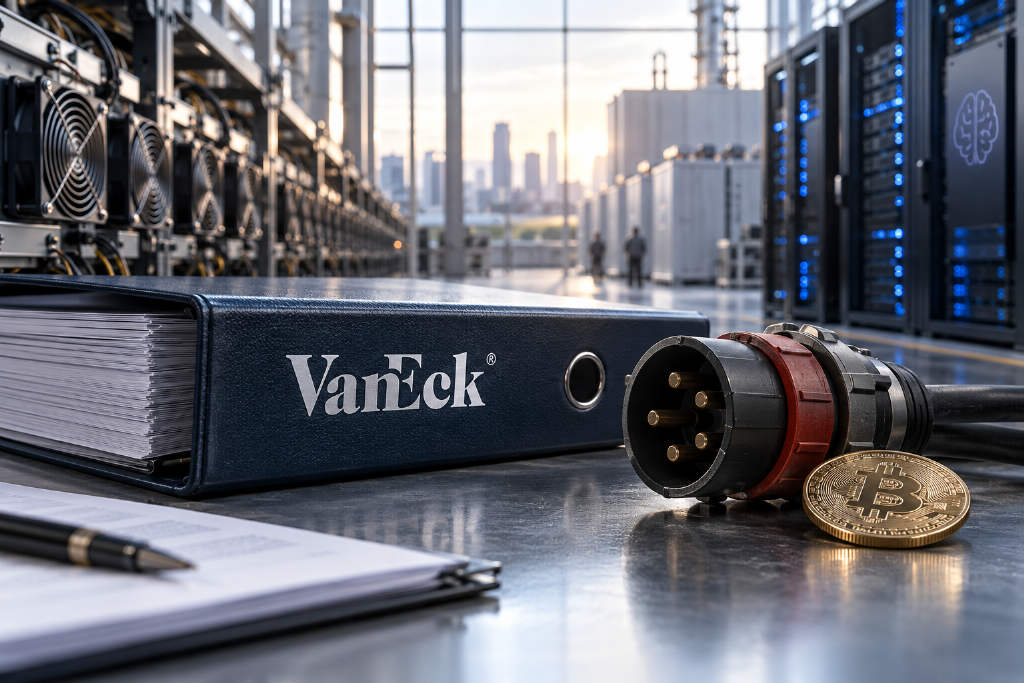
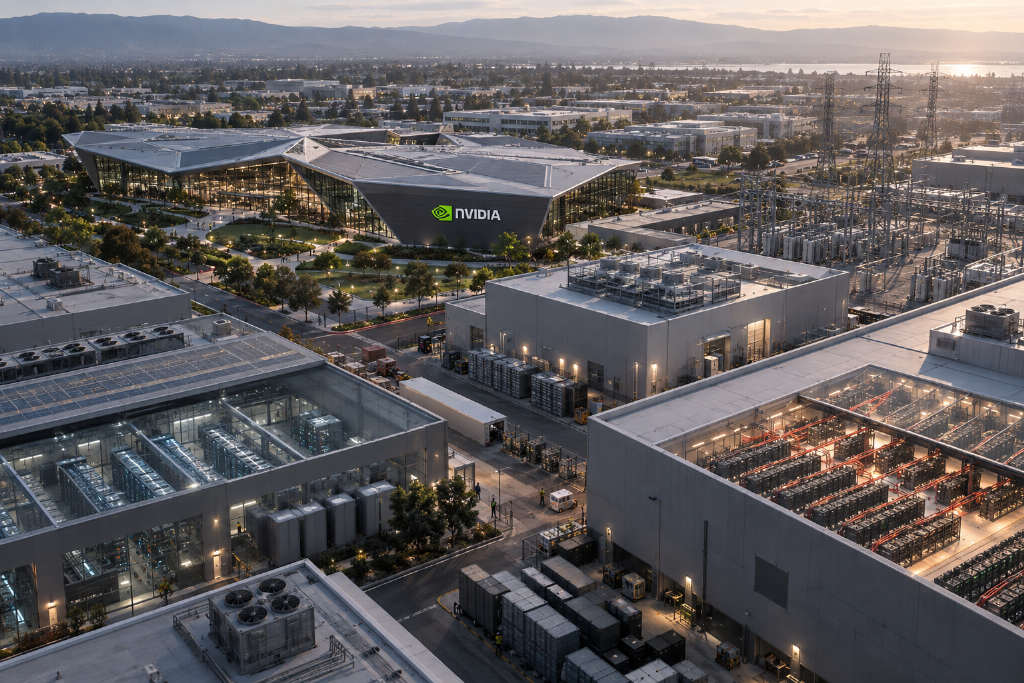
VanEck2026-10-03 09:44:26VanEck says Bitcoin miners’ power contracts are gaining value as AI demand rises, while quantum computing is not yet a reason to sell BTCVanEck’s head of digital assets research, Matthew Sigel, said in an interview on Oct. 3 that the rapid buildout of the artificial intelligence industry is changing how the market values Bitcoin mining companies. In his view, miners are no longer judged only by hash rate and BTC production capacity. Their access to power, especially long-term contracted supply, is becoming more valuable as AI data centers compete for large amounts of stable electricity. Sigel said some miners have signed 10- to 20-year power lease agreements with investment-grade counterparties, and that these contracts give them an element of optionality beyond straightforward Bitcoin exposure. He added that electricity is becoming a scarcer resource as AI expands, which could open new business paths for miners with low-cost, long-duration power arrangements, including a shift toward AI infrastructure. On the market side, Sigel said Bitcoin is showing signs of seller fatigue and that investors should watch for opportunities after pullbacks. He also compared Bitcoin and gold in portfolio construction, arguing that Bitcoin could still gain a larger share over time. As for quantum computing, he described it as a long-term risk worth monitoring, but not one that currently justifies selling BTC. VanEck remains positive on long-term Bitcoin adoption and sees Bitcoin reaching a portion of gold’s market value as one possible valuation reference.60
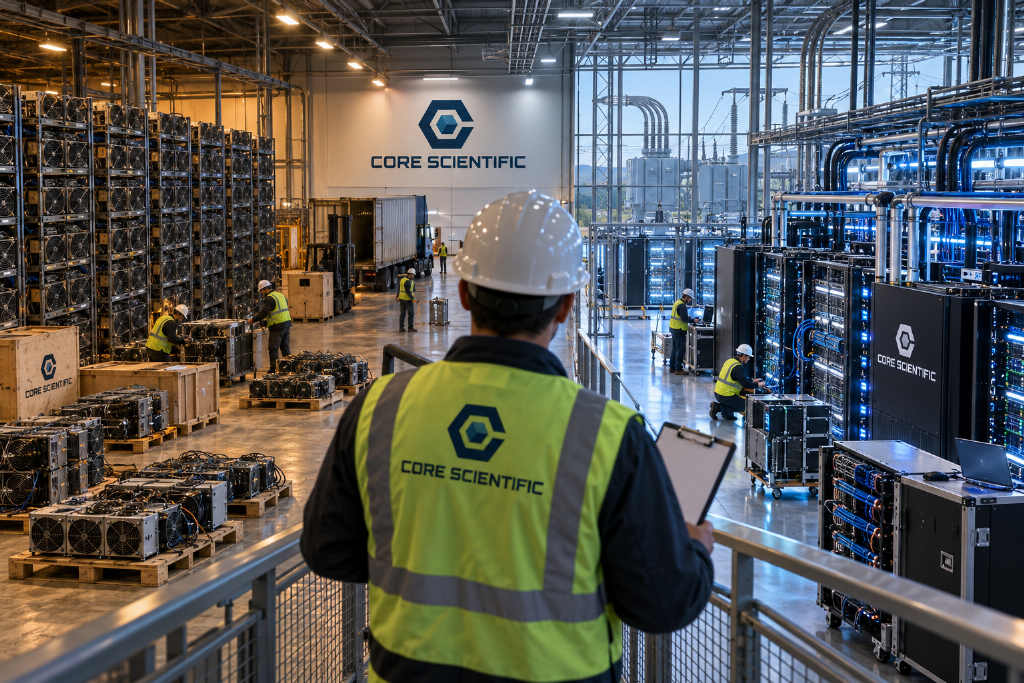
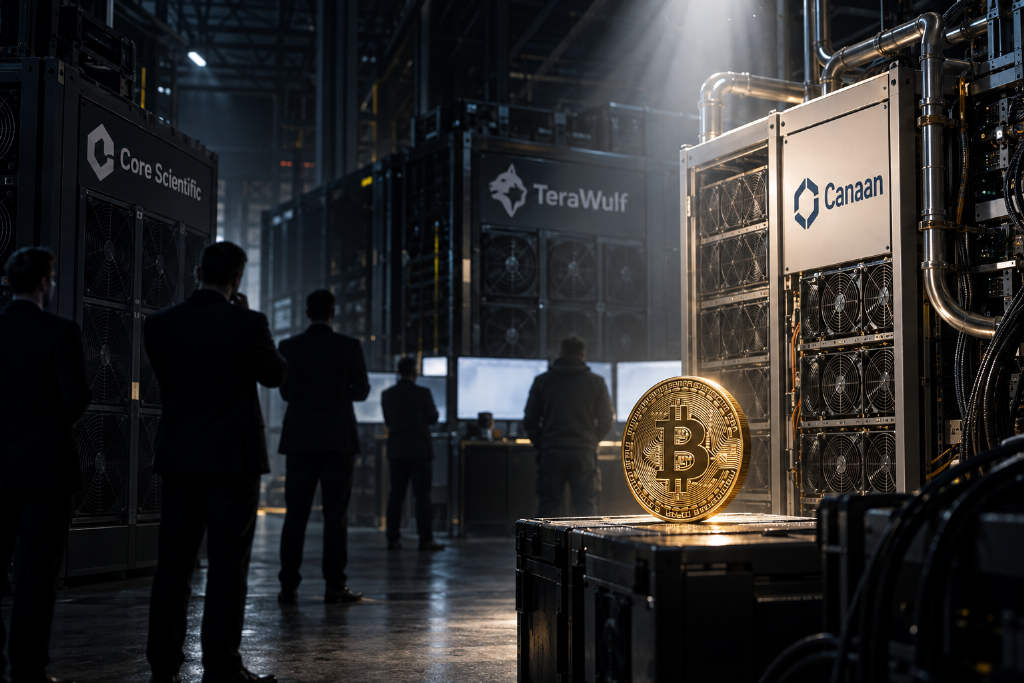
CoinShares2026-10-01 12:14:35CoinShares says public bitcoin miners are shifting to AI, with Core Scientific canceling rig ordersPublicly listed bitcoin miners are redirecting power capacity and data center infrastructure toward artificial intelligence and high-performance computing, according to a new report from CoinShares. The firm estimated that AI computing can generate annualized profit of about $1.5 million per megawatt, compared with roughly $500,000 per MW from bitcoin mining. CoinShares said the shift is already visible in company operating data. Core Scientific paid $41.9 million to cancel orders for about 15 EH/s of next-generation mining machines. In CoinShares’ view, miner valuations may increasingly hinge on the value of power access and data center assets rather than hash rate alone. Separate data from CryptoQuant showed that bitcoin mining companies with AI exposure have gained 21% this year, while those without AI initiatives have fallen 8%. CryptoQuant also said Core Scientific sold about 3,136 BTC this year, cutting its bitcoin reserves by more than 90%. JPMorgan analysts added that bitcoin briefly moved above their estimated production cost of about $85,000 this week after staying below that level for 280 consecutive days, a move they said could ease profitability pressure on miners and reduce the risk of forced selling.70
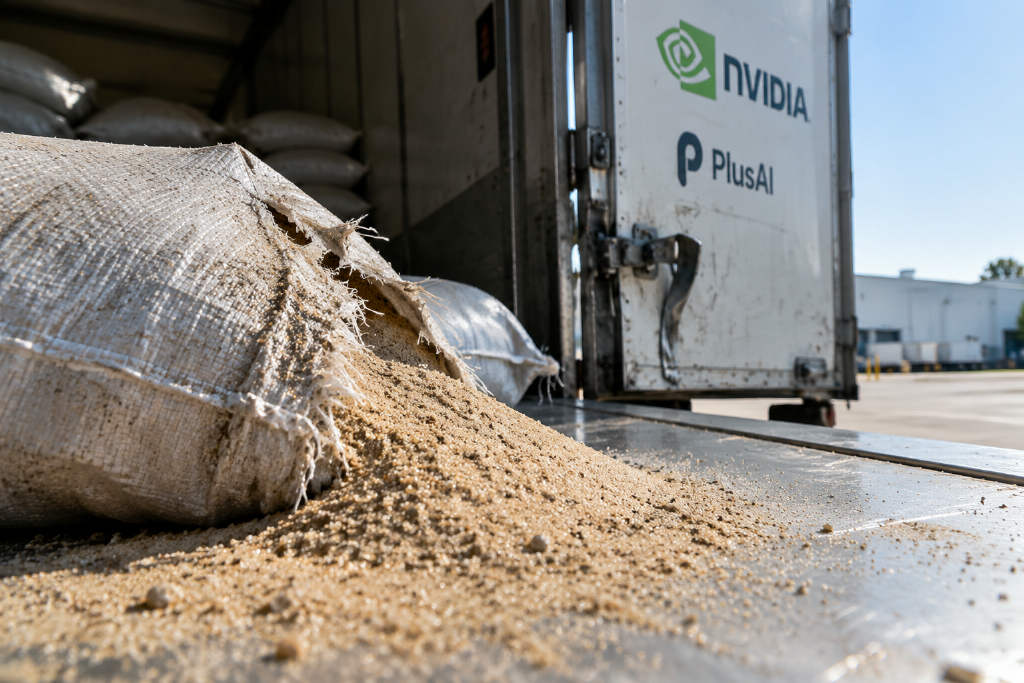
Nvidia2026-09-29 03:48:22Stolen Nvidia- and PlusAI-branded trailers in California turned out to be carrying 40,000 pounds of sandTwo trailers bearing Nvidia and PlusAI logos were stolen in California, but the thieves did not find high-value AI chips inside. According to WIRED, the trailers were carrying a combined 40,000 pounds of sand used by PlusAI as simulated payload for autonomous trucking research and testing. The company said the actual tractor units equipped with self-driving technology were parked inside its warehouse and were not taken. PlusAI spokesperson Lauren Kwan told WIRED that the trailers were recovered with the sand intact, roughly 20,000 pounds in each trailer, after the locks had been broken. Fremont police spokesperson Amy Gee said the case remains under investigation and no arrests had been made. The trailers were returned to PlusAI later that day. The incident also highlights a broader cargo theft trend in North America. Verisk CargoNet’s Q2 2026 report said the U.S. and Canada recorded 677 supply-chain thefts, down 26% year over year, while estimated losses rose to $304.6 million from $135.7 million a year earlier. The report identified enterprise computing gear, networking equipment, components, and cryptocurrency mining machines as common high-value targets. WIRED also noted separate theft cases involving Tesla batteries, Bitcoin miners, and data-center equipment worth millions of dollars.190
JPMorgan2026-09-28 09:14:18JPMorgan says U.S. corporate financing surplus is near historic highs, with buybacks supporting equities and Bitcoin back above production costJPMorgan said in its Sept. 24, 2026 flows and liquidity report that the U.S. corporate sector’s financing surplus in the second quarter was close to 2% of GDP, one of the highest non-crisis readings since data began in 1952. The bank said non-financial corporates posted a surplus of about 1.5%, the highest non-crisis level since 1958, as cash-flow growth outpaced capital spending and reduced the need for external financing. According to JPMorgan analyst Nikolaos Panigirtzoglou, AI-related capital expenditure remains strong, but the aggregate pace of capex has been held back by weakness outside concentrated areas such as data centers. The bank argued that the late-1990s style capex excess has not yet reappeared in the broad data, while corporate savings continue to flow mainly into share buybacks. JPMorgan expects global buybacks to reach $1.7 trillion in 2026, including $1.3 trillion from U.S. companies. On crypto, the report said Bitcoin had spent 280 days below its estimated production cost before recently moving back above that level. JPMorgan estimated the average cost to mine one Bitcoin at about $85,000, adding that a sustained move above that threshold would ease pressure on miners and reduce the risk of forced selling. The bank also said network hashrate and mining difficulty are down about 19% and 15% from their peaks in October last year as miners increasingly shift toward AI-related business.170
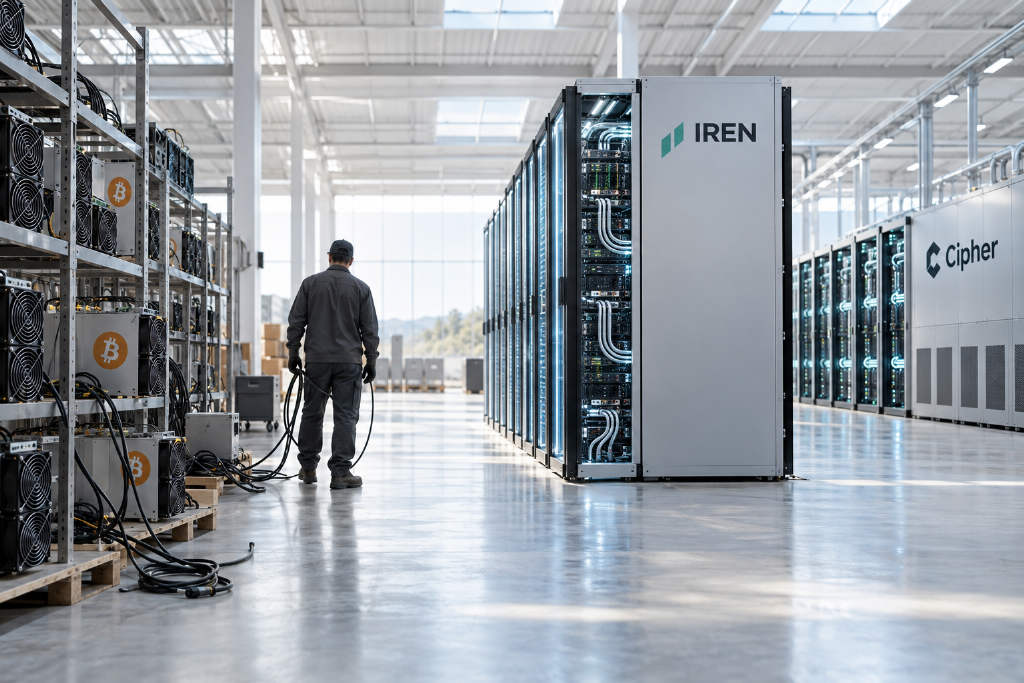
CoinShares2026-09-15 13:56:30CoinShares says Bitcoin miners’ shift to AI may be hard to reverse even if core BTC economics recoverCrypto asset manager CoinShares said the migration of Bitcoin miners toward AI has reached a stage that may be difficult to reverse, even if the native Bitcoin mining business sees a recovery. According to the firm, at least 35 EH/s of hash rate is already planned to leave publicly listed mining companies. CoinShares specifically said that IREN, a listed Bitcoin miner, plans to exit by the end of the year, while Cipher could follow by the end of 2027. The comment points to a continued reallocation of mining-related infrastructure away from traditional Bitcoin-focused operations and toward AI-oriented use cases, based on CoinShares’ assessment.740
NVIDIA2026-09-15 12:07:17NVIDIA Pullback Pressures the AI Trade and Spills Into Crypto Compute PlaysBlockTempo published a market analysis by the MEXC Crypto Pulse research team arguing that NVIDIA’s stock pullback has become a signal for a broader repricing across AI-linked assets. The piece says Wall Street’s concern is less about NVIDIA losing its technological edge and more about whether hyperscale cloud operators can turn tens of billions of dollars in hardware spending into free cash flow within a reasonable period. It points to several pressures arriving at once: elevated valuation multiples, a difficult transition to next-generation chip architecture, supply-chain constraints in advanced packaging and cooling systems, and a shift in capital preferences as macro conditions change. The article also tracks how that repricing is moving beyond U.S. tech stocks. It says decentralized AI tokens have shown strong short-term beta sensitivity to major chip names, with volatility in crypto AI assets often amplifying moves seen in listed semiconductor leaders. Bitcoin miners repositioning themselves as high-performance computing and AI data-center operators are also described as exposed, because that thesis depends on sustained hardware demand and pricing power in compute rentals. On top of that, the derivatives market is flashing a more defensive posture, with rising put positioning and systematic strategies cutting risk as volatility increases.850
US stocks2026-09-10 20:18:49U.S. stocks close lower as crypto-linked shares and precious metals names slideU.S. equities ended lower, with the Dow Jones Industrial Average down 0.60%, the S&P 500 off 0.58%, and the Nasdaq falling 0.65%, according to Techub News. Month to date in September, the Dow has declined 1.33%, while the S&P 500 and Nasdaq are down 0.52% and 0.07%, respectively. Precious metals-related stocks and exchange-traded funds also posted broad losses. Barrick Gold (GOLD) fell more than 7%, iShares Silver Trust (SLV) dropped more than 5%, First Majestic Silver (AG) lost 4.82%, VanEck Gold Miners ETF (GDX) slipped 3.45%, Coeur Mining (CDE) declined 3.14%, Newmont (NEM) fell 1.99%, and SPDR Gold Shares (GLD) dropped 1.71%. Crypto-related equities were broadly lower as well. Bit Brother (BTBT) fell 6.02%, Cipher Mining (CIFR) lost 5.68%, Hut 8 (HUT) dropped 5.55%, Riot Platforms (RIOT) fell 5.07%, MARA Holdings (MARA) slid 4.11%, CleanSpark (CLSK) lost 3.61%, Strategy (MSTR) dropped 3.12%, Circle (CRCL) fell 2.82%, and Coinbase (COIN) declined 1.40%. Bitmine (BMNR) was flat.940
Bitcoin2026-09-10 06:42:00Bitcoin Climbs 22%, but Mining Stocks Lag as AI Pivot Fails to Deliver a Fresh Re-ratingBitcoin has rebounded sharply since Aug. 17, rising about 22%, yet listed mining companies have not responded the way they often did in earlier rallies. Data cited from The Block shows that among 11 bitcoin miners and related firms it tracked, only Canaan outperformed BTC, while the median return for the rest was just 1.8%. Core Scientific and TeraWulf, despite reporting meaningful data center revenue tied to AI and high-performance computing, still trailed bitcoin by roughly 27 and 24 percentage points. The gap points to a change in how the market prices these companies. Miners were once treated as leveraged bitcoin plays because higher BTC prices could expand profits faster than costs moved. That framework weakens once companies shift toward AI data centers, where investors weigh construction spending, financing costs, customer quality, equipment supply, grid access, and delivery risk. Core Scientific, for example, posted $136.7 million in second-quarter data center hosting revenue and said 437MW had started billing by mid-July, while TeraWulf said HPC data center leasing made up more than 70% of its quarterly revenue. Even so, their shares did not keep pace with bitcoin. The article argues that the AI shift has not failed. Instead, the easy valuation premium may be fading as investors now want live megawatts, real AI revenue, and free cash flow after heavy capital spending.880